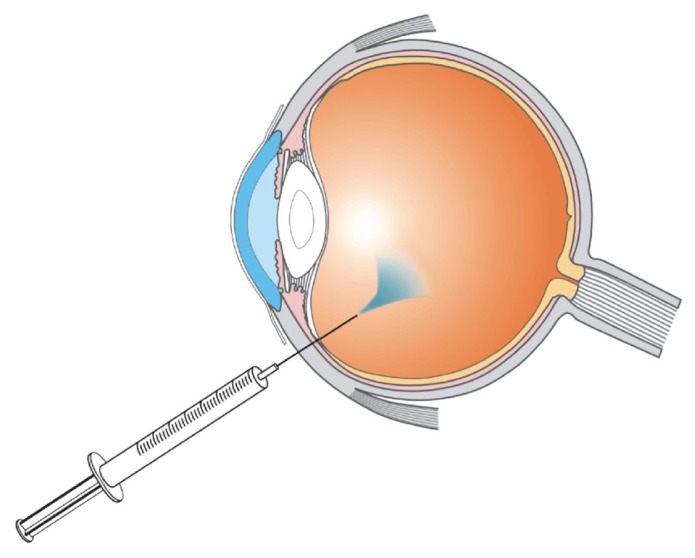
Intravitreal Implants
·
Dexamethasone intravitreal implant (DEX implant; Ozurdex,
Allergan, Irvine, CA)
o
delivers the steroid intravitreally for 6 months
o
consists of poly (lactic-co-glycolic acid), a DEgradable
polyester and dexamethasone
o
single-use applicator through a 22-gauge
o
uveitis and macular edema caused by retinal vein occlusion
o
350 µg and 700 µg version
o
Uses NOVADUR Delivery
system
o
GENEVA
(dexamethasone implant) study: Global Evaluation of implantable dexamethasone
in retinal Vein occlusion with macular edema (GENEVA) study
·
Vitrasert ganciclovir implant
o
poly(vinyl alcohol) and poly(ethylene vinyl
acetate)
o
delivers the medication for approximately 32 weeks (8 months) and has been shown
to halt the progression of CMV
o
nondegradable
o
5/4.5 mg
implant
o
Releases
1 mcg/ hour
o
Approaches concentration of 4 ug/ml intravitreal
·
Retisert fluocinolone implant
o
blend of the drug with poly(vinyl alcohol) and
methylcellulose
o
0.59 mg
pellet embedded in a nonbiodegradable scaffold designed to be implanted
in the vitreous cavity via a sclerotomy and anchored by a suture to the eye
wall
o
releases drug at steady state between 0.3 and 0.4µg/day for approximately 30 months
o
used most commonly for treatment of chronic non-infectious posterior uveitis.
o
Studied for DME
also
·
Iluvien fluocinolone implant
o
narrow cylinder 3.5 × 0.37 mm
o
25-gauge
o
lowest dose format (0.2 µg/day)
o
higher-dose (0.5 µg/day) system
o
FAVOR
(iluvien) study
·
I-vation triamcinolone implant
o
helical
screw coated with triamcinolone acetonide that delivers the drug
intravitreally for 36 months
o
25-gauge
o
drug is entirely within the coating on the helical structure
and not within the bulk of the device
·
ECT CNTF Implant
o
which allows the intravitreal implantation of a
chamber containing live cells programmed to release CNTF
o
1.5 ng/day
o
possible efficacy for age-related macular degeneration
(AMD) involving geographic atrophy and for RP
o
2 years or more
·
ECT technology anti-VEGF implant
o
NT-503
o
For ARMD
·
Brimonidine Intravitreal Implant
o
Patients With Geographic Atrophy Due to
Age-related Macular Degeneration (AMD)
o
This is a randomized, double-masked,
dose-response, sham-controlled evaluation of the safety and efficacy of
brimonidine tartarate intravitreal implant in patients with geographic
atrophy from age-related macular degeneration. It is hypothesized that the
implant may promote the release of neuroprotective
factors that may slow the progression of retinal degenerative disease.
📘 Want the exam-ready deep dive? This topic, and much more is covered in Ophthalmology Explorer (A High-Yield Clinical Reference for Ophthalmology Residents, Fellows & Board Exams) — available on Kindle. See all my books.
Experiencing symptoms like these? Learn about our Eye Department or book a consultation with Dr. Dhaval Patel.