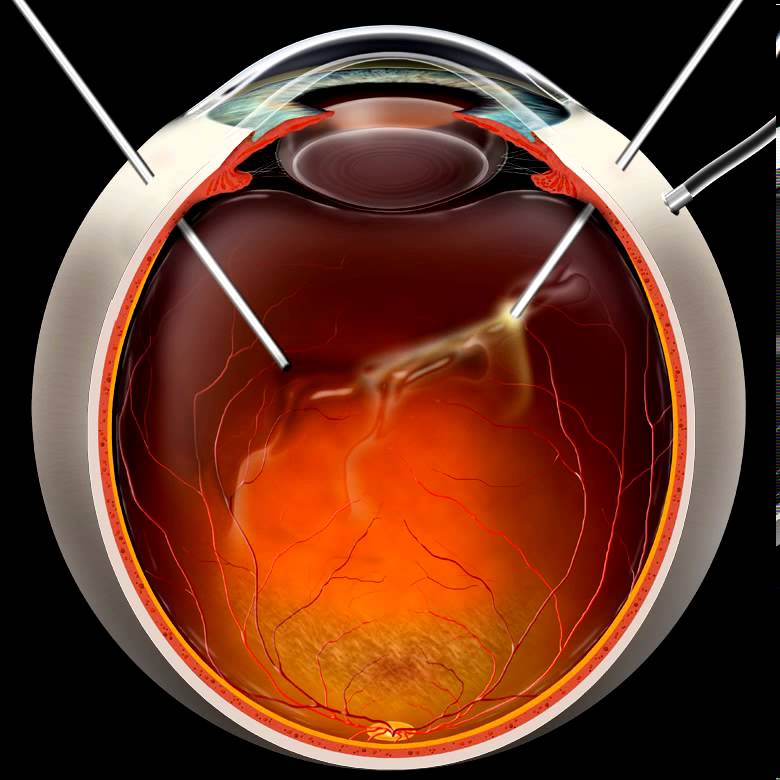
Causes of ReBleed after PPV
Last updated: September 2026
Recurrent vitreous hemorrhage (RVH) after pars plana vitrectomy (PPV) for proliferative diabetic retinopathy is a well-recognized complication, occurring in roughly 20% of eyes in recent series — understanding its causes and timing helps direct both prevention and management.
Classification by timing
- Early RVH (within 4 weeks of surgery) — the more common pattern, seen in the large majority of RVH cases in recent cohorts
- Late RVH (beyond 4 weeks, up to several months post-op) — less common but clinically important, often reflecting a different underlying mechanism than early bleeding
Documented causes
| Cause | Notes |
|---|---|
| Fibrovascular ingrowth at sclerotomy sites | The single most common cause in some large series — new vessels grow into the wound from residual vitreous incarcerated at the sclerotomy |
| Residual/recurrent neovascular membrane at the optic disc | Reflects incomplete regression of neovascularization at the time of initial surgery |
| Insufficient retinal photocoagulation | Underscores the importance of adequate, complete PRP at the time of vitrectomy, not just "some" laser |
| Residual/recurrent epiretinal proliferative membrane | Ongoing fibrovascular activity on the retinal surface |
| Retinal vein occlusion | A distinct new event rather than a direct surgical complication |
| Postoperative hypotony | Low IOP can predispose to bleeding from friable new vessels |
| Ocular trauma | Even minor trauma can disrupt friable neovascular tissue post-operatively |
Risk factors identified in recent cohort data
- Severe intraoperative bleeding during the index surgery
- Anticoagulant use
- Dialysis-dependent renal failure
- Protective factor: silicone oil tamponade at the index surgery is associated with a lower rate of postoperative recurrent hemorrhage compared to gas tamponade — worth considering in eyes at particularly high risk of rebleeding
Role of perioperative anti-VEGF
Intraoperative (rather than preoperative) bevacizumab has been associated with reduced postoperative vitreous hemorrhage rates in comparative studies — timing matters here, as preoperative-only injection has not shown the same consistent benefit.
Management approach
- Most centers observe for several weeks first, since a meaningful proportion of RVH clears spontaneously
- Intravitreal anti-VEGF can be used as an interim measure while awaiting clearance or as a bridge to further surgery
- Persistent RVH without clearance, or RVH obscuring view of a new/recurrent problem, warrants repeat vitrectomy
- Peripheral retinal cryotherapy (external cryopexy posterior to the ora) has been described as an option to address peripheral fibrovascular activity contributing to recurrent bleeding
Key references: Predictive factors, timing, and management of recurrent vitreous hemorrhage after PPV in advanced PDR. BMC Ophthalmol. 2026. | Reasons for and management of postvitrectomy vitreous hemorrhage in PDR. 2010.
📘 Want the exam-ready deep dive? This topic, and much more is covered in Ophthalmology Explorer (A High-Yield Clinical Reference for Ophthalmology Residents, Fellows & Board Exams) — available on Kindle. See all my books.
Want to know more about treatment? Read about Retina Treatment at Sadbhaav or book a consultation with Dr. Dhaval Patel.