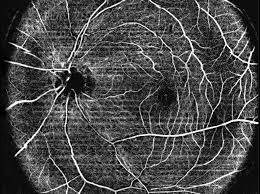
Role of OCT Angiography in Detecting Early Diabetic Retinopathy
What is the role of OCT ANGIOGRAPHY in detecting Early Diabetic Retinopathy ?
OCT angiography (OCTA) has emerged as a transformative tool in detecting diabetic retinopathy (DR) at stages where conventional methods may miss critical changes.
What is OCTA?
OCT Angiography is a non-invasive imaging technique that maps retinal and choroidal vasculature by detecting motion contrast from flowing blood cells — without the need for dye injection (unlike Fluorescein Angiography/FFA).
Why Early Detection Matters
Diabetic retinopathy often causes irreversible vision loss before symptoms appear. The window for effective intervention is in the preclinical and early clinical stages — exactly where OCTA excels.
Key Roles of OCTA in Early DR Detection
1. Foveal Avascular Zone (FAZ) Analysis
- OCTA precisely measures FAZ area, perimeter, and circularity
- FAZ enlargement and irregularity are among the earliest detectable signs of DR, even before ophthalmoscopic changes
- Correlates with visual acuity loss before it becomes clinically apparent
2. Detection of Subclinical Capillary Changes
- Identifies "capillary non-perfusion" and dropout in the superficial and deep capillary plexuses (SCP & DCP)
- The deep capillary plexus is particularly vulnerable early in DR and is better visualized by OCTA than FFA
- Detects microaneurysms with comparable or superior sensitivity to FFA in some studies
3. Retinal Flow Density Mapping
- Quantifies vessel density (VD) — reductions in VD precede visible retinopathy
- Can detect subclinical ischemia in patients classified as "no DR" on fundus exam
4. Layer-by-Layer Vascular Analysis
- Separately evaluates:
- Superficial Capillary Plexus (SCP)
- Deep Capillary Plexus (DCP)
- Outer retina
- Choriocapillaris
- Early DR preferentially affects the DCP, which is invisible on clinical exam
5. Choriocapillaris Assessment
- Choroidal flow impairment may precede retinal changes
- OCTA can detect choriocapillaris flow deficits in early-stage diabetic eyes
6. Monitoring Diabetic Macular Ischemia (DMI)
- Detects ischemic changes at the macula early, guiding management before CSME develops
| Feature | Fundus Photography | FFA | OCTA |
|---|---|---|---|
| Dye injection needed | No | Yes | No |
| Deep plexus imaging | Poor | Limited | Excellent |
| FAZ quantification | No | Qualitative | Quantitative |
| Subclinical ischemia | No | Limited | Yes |
| Microaneurysm detection | Limited | Good | Good–Excellent |
| Dynamic leakage info | No | Yes | No |
| Repeatability | High | Moderate | High |
Limitations to keep in mind
| OCTA Limitation | Description & Clinical Impact |
|---|---|
| No leakage information | Cannot replace FFA entirely for assessing macular edema leakage. |
| Motion artifacts | Patient cooperation is essential to avoid image distortion. |
| Limited field of view | Standard coverage is only 3×3 or 6×6 mm, though wide-field OCTA is emerging. |
| Cost and availability | The technology is expensive and not universally accessible yet. |
| Interpretation learning curve | Requires specially trained readers to correctly analyze data. |
Clinical Significance Summary
OCTA enables detection of DR at the neurovascular unit level, identifying capillary dropout, FAZ changes, and perfusion deficits before lesions appear on fundoscopy — offering a critical opportunity for early intervention, tighter glycemic control counseling, and prevention of vision-threatening progression.
It is increasingly recommended as an adjunct in screening high-risk diabetic patients, particularly those with long disease duration, poor glycemic control, or subclinical visual symptoms.
These all details in just for basic information about the diseases. Please consult your doctor before following this by yourself. --- Dr Dhaval Patel (MD, AIIMS Delhi)
Considering treatment? Read about Retina Treatment at Sadbhaav or book a consultation.