Ophthalmology Exams Abroad: Gulf, UK, ICO, Europe, USA, Australia
Last updated: October 2026
Key points in 60 seconds
- Gulf licensing exams are the most practical route abroad for many Indian ophthalmologists.
- UK: FRCOphth Part 1 and Part 2 Written; also FRCS Ophth (Glasgow and Edinburgh).
- ICO exams and the European Board (FEBO) are internationally recognised.
- USA and Australia require local training or recognition: check official sites, as rules change.
A practical guide for Indian ophthalmologists and residents thinking of working or training abroad: which exam each country uses, who can sit it, and where to practise. Formats were checked against official websites in October 2026, but they change, so always confirm before you apply.
Free timed mocks: Gulf licensing · FRCOphth Part 2 Written · FRCOphth Part 1 / ICO basic sciences · FRCS Ophth (Glasgow/Edinburgh) · ICO optics · ABO WQE · OKAP
Optometrist? See optometry exams abroad for NBEO, GOC, OCANZ, Canada, Ireland and Gulf licensing.
At a glance
| Destination | Main written exam | Open to India-trained doctors? | Our view |
|---|---|---|---|
| Saudi Arabia, UAE, Qatar, Oman, Kuwait, Bahrain | Licensing or classification MCQ exams (computer-based) | Yes | Most practical destination for many; strong demand |
| United Kingdom (RCOphth) | FRCOphth Part 1 and Part 2 Written | Yes, for the examinations | Widely respected; route to GMC specialist registration with experience |
| UK surgical colleges | FRCS Ophth (Glasgow); Edinburgh pathway (revised 2027) | Yes | Popular, online written parts (Glasgow) |
| International (ICO) | Standard and Advanced Examinations | Yes, taken in your own country | Good benchmark and stepping stone |
| Europe (EBO) | EBOD written and clinical cases | Only if specialist or final-year resident in an EU country, Norway, Switzerland or Turkey | Not an option from India |
| USA | USMLE, then ABO WQE after US residency | Yes, but needs US residency for board certification | Long and competitive route |
| Australia and New Zealand | RANZCO specialist assessment; AMC for general registration | Yes, through assessment | Smaller numbers; assessment-based |
| Japan | Japanese national licensing exam and specialist board (in Japanese) | Only with Japanese fluency | English-language preparation does not apply |
Gulf countries
- Saudi Arabia (SCFHS): the Saudi Commission for Health Specialties classifies foreign specialists and registers them after primary source verification. Many candidates sit a computer-based MCQ exam delivered by Prometric; holders of certain Western board certificates may be classified without it, decided case by case. The official SCFHS ophthalmology blueprint weights emergency ophthalmology, anterior segment and refractive surgery, and comprehensive ophthalmology at 16% each, paediatrics 13%, glaucoma 10%, retina, uveitis, oculoplastics and neuro-ophthalmology 6% each, and optics 5%, which is a useful guide to revision.
- United Arab Emirates: three authorities license doctors: the Dubai Health Authority (DHA), the Department of Health Abu Dhabi (DOH) and the Ministry of Health and Prevention (MOHAP) for the Northern Emirates. Each has its own computer-based exam (DHA and MOHAP via Prometric, DOH via Pearson VUE), and attempt limits apply. Some specialty qualifications from listed countries exempt candidates from the exam.
- Qatar, Oman, Kuwait and Bahrain each have their own licensing authority (Qatar's Department of Healthcare Professions, the Oman Medical Specialty Board, Kuwait's Ministry of Health and Bahrain's NHRA), mostly using computer-based MCQ exams and DataFlow verification.
- Practise with the Gulf licensing mock.
United Kingdom
- Royal College of Ophthalmologists: Part 1 FRCOphth (two 90-question MCQ papers on basic and clinical sciences), the Refraction Certificate (practical), Part 2 Written (two 90-question MCQ papers, online) and Part 2 Oral (structured viva and OSCE). Details are on our OKAP, FRCOphth and ICO page.
- To practise in the UK you need GMC registration, usually with an English language test (IELTS or OET). Experienced specialists can apply for specialist registration through the GMC portfolio pathway (which replaced CESR in 2023).
- Practise: Part 1 basic sciences mock and Part 2 Written mock.
UK surgical colleges: Glasgow and Edinburgh
- Royal College of Physicians and Surgeons of Glasgow, FRCS Ophth: written Parts 1 and 2 are delivered online with remote proctoring, followed by a clinical Part 3. The Fellowship shows sound knowledge of the scientific basis of ophthalmology applied to common conditions; it does not give direct entry to UK higher specialist training. From 1 January 2028, ICO passes will no longer exempt candidates from Parts 1, 2 or 3.
- Royal College of Surgeons of Edinburgh: the ophthalmology examination pathway is being revised for early 2027, reducing four exams to three components (written MCQ, written SBA, and structured oral with OSCE) and retiring the current Membership examination. October 2026 is expected to be the last sitting of the current FRCSEd Component 2 orals.
- Practise with the FRCS Ophthalmology mock.
International Council of Ophthalmology (ICO)
- Standard Examinations: Visual Sciences, Optics, Refraction and Instruments (60 single-best-answer questions in 90 minutes), and Clinical Ophthalmology, followed by the Advanced Examination. Passing the Advanced Examination plus a local face-to-face examination allows use of the FICO designation.
- Exams are in English and can be taken in your own country. The 2026 Standard and Advanced Examinations were held on 19 October 2026.
- Practise with the ICO optics mock and the basic sciences mock.
Europe: European Board of Ophthalmology (EBO)
- The EBOD examination has a written part (30 multiple true/false questions, each with five statements, plus 30 single-best-answer questions in 2 hours) and a clinical cases part across four subject areas.
- Eligibility is limited to certified specialists, or residents in their final year, in an EU country, Norway, Switzerland or Turkey. Doctors trained in India can sit it only if they are training or qualified in one of these countries.
United States
- International medical graduates must pass the USMLE steps and obtain ECFMG certification, then match into an ophthalmology residency (through the SF Match), which is highly competitive.
- American Board of Ophthalmology certification follows an accredited residency: the Written Qualifying Examination (about five hours at computer testing centres; the 2026 sitting was on 19 September), then an Oral Examination.
- Residents worldwide can take the OKAP or OKAP International (260 questions across the 13 BCSC sections) as an in-training benchmark.
- Practise with the ABO WQE-style mock and the OKAP mock.
Australia and New Zealand
- Overseas-trained ophthalmologists apply to the Royal Australian and New Zealand College of Ophthalmologists (RANZCO) for specialist assessment, which judges comparability with Australasian training and may require supervised practice or examinations. General registration through the Australian Medical Council is a separate route. Check RANZCO's specialist international medical graduate information for current requirements.
Japan and other non-English systems
- Practising in Japan requires passing the Japanese national medical licensing examination and specialist training in Japanese, so English-language MCQ preparation does not help. The same applies to most non-English-speaking countries.
Before you start: check the official website for eligibility, fees and dates; keep certificates, logbooks and experience letters ready for primary source verification; and avoid "recall" question banks, which breach exam rules. Original practice questions and a sound grasp of the basics are what pass these exams.
Related: OKAP, FRCOphth and ICO exams, AIOS-OKAT guide, all free mock tests, OKAT Decoded books.
Key sources
- SCFHS ophthalmology exam blueprint 2024–27
- RCSEd ophthalmology examination pathway announcement (July 2026)
- RCPSG FRCS Ophthalmology examinations
- ICO Examinations
- EBO: structure of the examination and eligibility
- American Board of Ophthalmology: Written Qualifying Examination
📘 Want more exam-ready material? See Most Commons in Ophthalmology on Kindle, or browse all my books.
How to cite this page
Patel D. Ophthalmology Exams Abroad: Gulf, UK, ICO, Europe, USA, Australia. RPC Rounds (Sadbhaav Eye Clinic). Updated October 2026. Available at: https://www.sadbhaavclinic.com/ophthalmology-exams-abroad.html. Accessed [date].
Looking for an eye specialist in Ahmedabad? Learn about our Eye Department or book a consultation with Dr. Dhaval Patel.
FRCOphth, ICO or FEBO next?
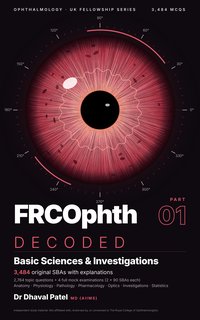
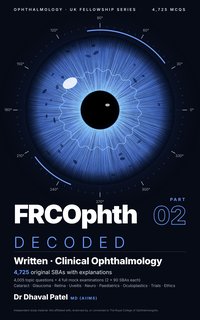
FRCOphth Decoded by Dr Dhaval Patel: Part 1 (3,484 SBAs) and Part 2 Written (4,725 SBAs), every option explained with a "why not" for each distractor and a pearl, plus 8 full mock examinations.