Retina Treatment in Ahmedabad
The retina is the thin, light-sensitive layer at the back of the eye, like the film in a camera. When it is damaged, vision can be lost quickly and sometimes permanently, so early diagnosis and the right treatment make a real difference.
Conditions we check and treat
- Diabetic retinopathy: damage to the retina's blood vessels from diabetes.
- Retinal tears and detachment: the retina tears or peels away from the back of the eye.
- Age-related macular degeneration (AMD): wear of the macula, the centre of the retina used for reading and recognising faces.
- Retinal vein or artery blockage (an "eye stroke").
- Central serous chorioretinopathy: fluid under the centre of the retina, often linked to stress or steroid use.
- Floaters and flashes, which need a check to rule out a tear.
- Retinal changes from high blood pressure, high myopia, some medicines (such as hydroxychloroquine) and inflammation.
Tests, explained
- Dilated retina examination: drops widen the pupil so the doctor can see the whole retina. Vision stays blurred for a few hours, so do not drive yourself home.
- Fundus photography: colour photographs of the retina to record and compare over time.
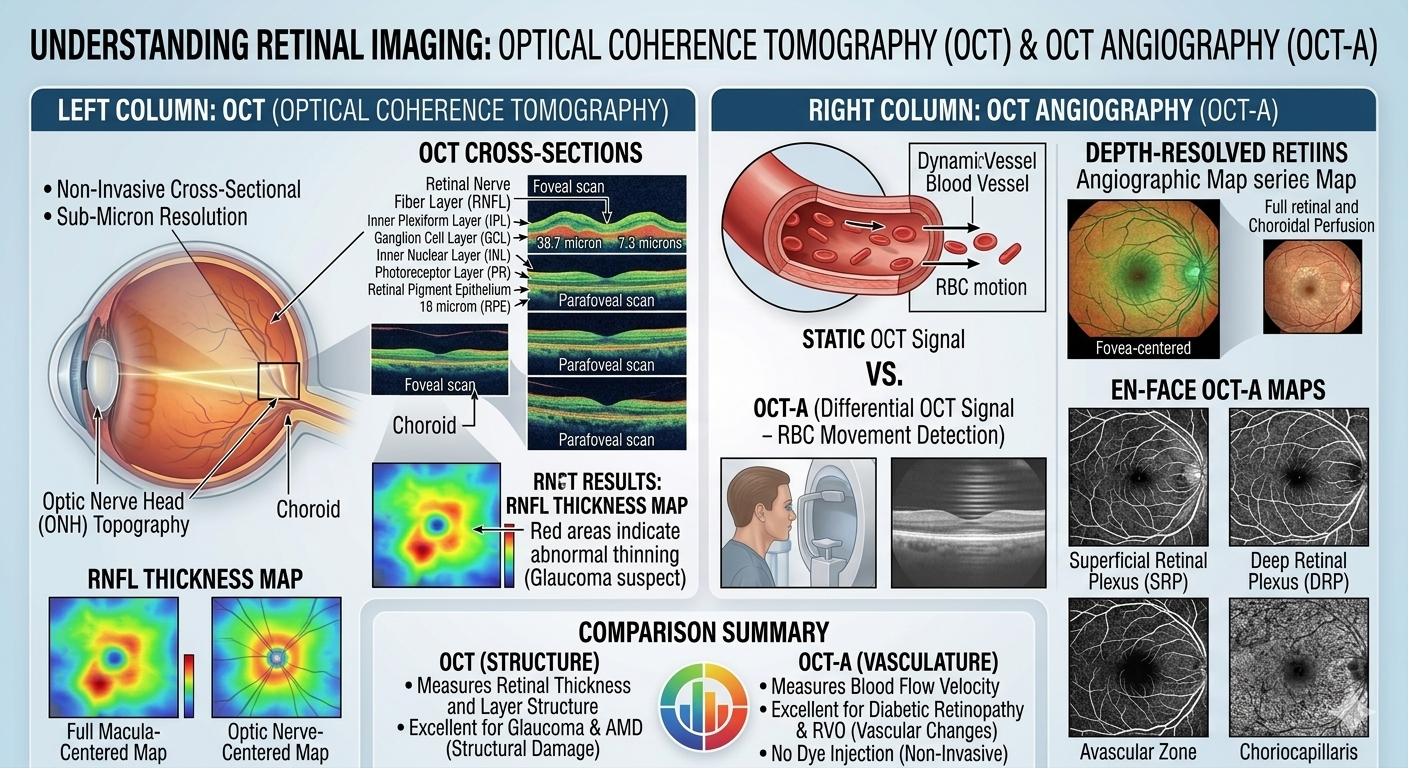
- OCT scan: a quick, painless scan (like an ultrasound with light) that shows the layers of the retina and any swelling or fluid.
- OCT angiography: shows the blood vessels of the retina without an injection.
- Fluorescein angiography (FFA): a dye injected in the arm lights up the retinal blood vessels in photographs; used when needed.
- B-scan ultrasound: used when bleeding or a dense cataract blocks the view.
Laser treatment
Laser light is focused on the retina to seal a tear, stop leaking vessels, or calm a retina that is growing fragile new vessels (as in advanced diabetic retinopathy). It is done sitting at a machine in the clinic after numbing drops. You may see bright flashes and feel mild discomfort. Vision is usually blurry for the rest of the day, so bring someone with you. Some conditions need more than one session.
Injections into the eye
For swelling or abnormal blood vessels at the centre of the retina (wet AMD, diabetic macular oedema, vein blockage), medicines called anti-VEGF (for example ranibizumab, bevacizumab, aflibercept, faricimab) or steroid implants are injected into the eye.
- The eye is numbed and cleaned; the injection itself takes a few seconds and most people feel only pressure.
- Most people need a series of injections, often monthly at first, then spaced out according to the OCT scan.
- Afterwards the eye may feel gritty and have a small red patch; this settles in a few days.
- Come back the same day if pain increases, vision gets worse or the eye becomes very red in the days after an injection, because infection, though rare, needs urgent treatment.
Surgery
A retinal detachment, a large bleed inside the eye that does not clear, scar tissue pulling on the retina, or a macular hole may need an operation called vitrectomy, sometimes with a gas bubble or silicone oil inside the eye. After a gas bubble you must keep a set head position for some days and must not fly or go to high mountains until the gas has gone. We explain the options and plan the operation with you.
When to come the same day
Sudden loss of vision, a curtain or shadow over part of your vision, new flashes, or a sudden shower of floaters can mean a retinal tear, detachment or eye stroke. Come the same day: early treatment can save sight.
Protecting your retina
- Control diabetes, blood pressure and cholesterol, and do not smoke.
- If you have AMD, check each eye separately with an Amsler grid each week and report any new wavy lines.
- If you are very short-sighted, know the warning signs of detachment and have regular dilated checks.
Treatment covered by health insurance, including GIC cashless empanelment, is subject to policy terms and pre-authorisation.
Frequently Asked Questions
Why choose Sadbhaav for retina care
Dr. Dhaval Patel, MD (Ophthalmology, AIIMS New Delhi), examines the retina with dilated examination, photographs and OCT, explains what the scan shows on screen, and recommends the treatment that suits your eye. Read about Dr. Patel's credentials and experience.
Noticing floaters, flashes, or sudden vision changes? Book a consultation or message us on WhatsApp — retina problems are often time-sensitive.