Glaucoma Treatment in Ahmedabad
हिंदी में पढ़ें: काला मोतिया (ग्लूकोमा)
Glaucoma is a disease of the optic nerve, the "cable" that carries pictures from the eye to the brain. It usually damages side vision first, slowly and without pain, so most people do not notice anything until a lot of vision is lost. Treatment cannot bring back lost vision, but it can protect the vision you still have for the rest of your life.
Who is at higher risk
- Age over 40, and especially over 60
- A parent, brother or sister with glaucoma
- High eye pressure found at an eye check
- High minus (short-sighted) or high plus (long-sighted) glasses
- Diabetes, or long-term use of steroid tablets, inhalers, creams or eye drops
- A previous eye injury
If any of these apply to you, have a full eye check every 1 to 2 years. See how often to have an eye check.
The main types, in simple words
- Open-angle glaucoma (the most common): the eye's drainage channel works poorly, pressure rises slowly, and there are no symptoms for years.
- Angle-closure glaucoma: the drainage angle is narrow and can close. It may come on slowly, or suddenly as an emergency with a painful red eye.
- Normal-tension glaucoma: the optic nerve is damaged even though the pressure reads "normal".
- Secondary glaucoma: caused by something else, such as steroids, injury, inflammation, diabetes or an advanced cataract.
Tests that find and follow glaucoma
None of these tests hurts. Together they tell us whether you have glaucoma, how advanced it is, and later whether treatment is working.
- Eye pressure test (tonometry): a quick measurement of the pressure inside the eye.
- Gonioscopy: a special contact lens on the numbed eye lets the doctor see whether the drainage angle is open or narrow.
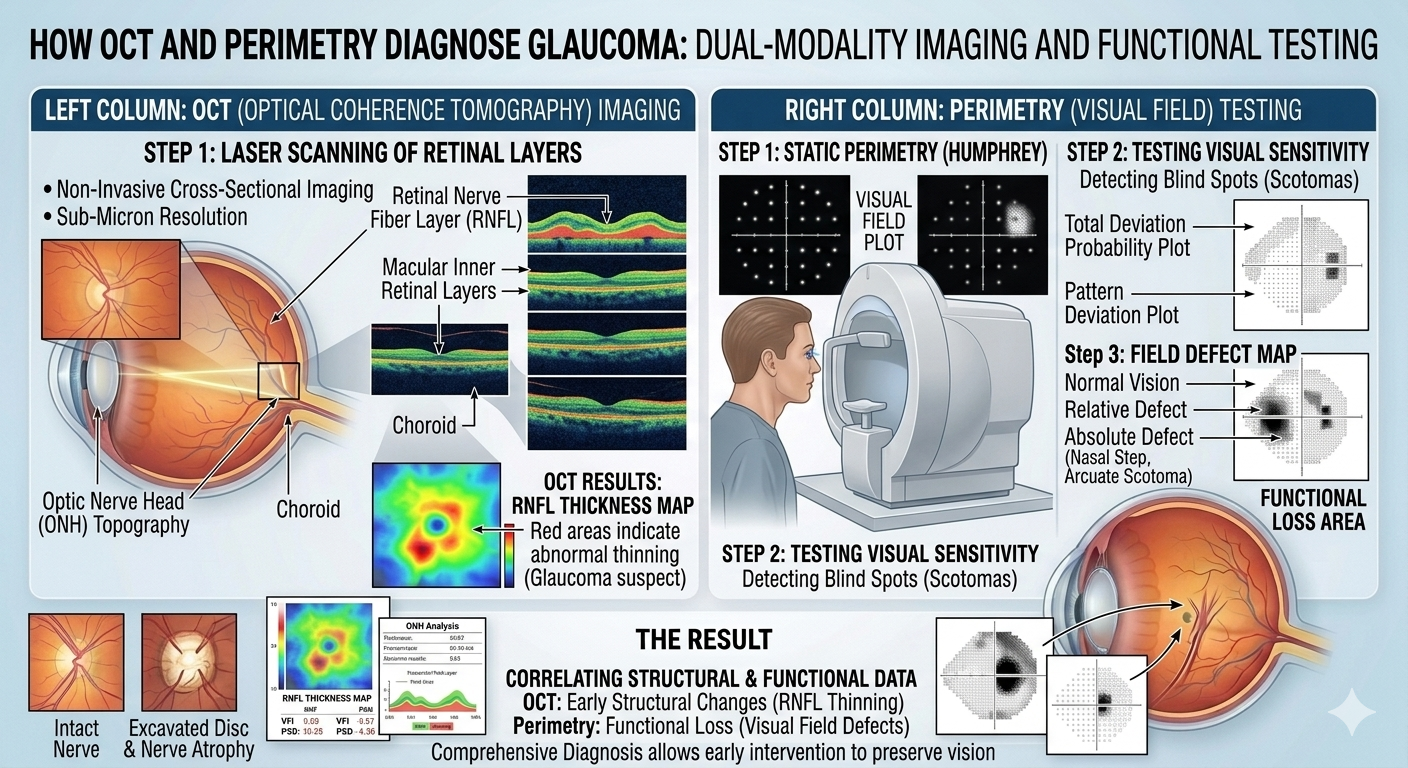
- Optic nerve check and OCT scan: a picture of the optic nerve and its nerve fibre layer, which shows early damage before you notice it.
- Visual field test (perimetry): you press a button when you see small lights; it maps your side vision.
- Corneal thickness (pachymetry): a thick or thin cornea can make the pressure reading look higher or lower than it really is.
Treatment option 1: eye drops
Daily eye drops lower the pressure, either by reducing the fluid the eye makes or by helping it drain. For many people, one or two drops a day keep the pressure safe for years.
- Use the drops at the same time every day; link them to a daily habit such as brushing your teeth.
- After a drop, close the eye and press gently on the inner corner for 1 to 2 minutes. This helps the drop work and reduces side effects in the rest of the body.
- If you use more than one drop, wait 5 minutes between them.
- Tell us about side effects such as red or itchy eyes, darkening of the eyelid skin, longer eyelashes, tiredness or breathlessness. There is almost always another drop that suits you better.
- Bring your drops to each visit and tell us honestly if you miss doses. It changes what we advise.
See how to put in eye drops and our eye drop timetable maker.
Treatment option 2: laser
- SLT (selective laser trabeculoplasty) for open-angle glaucoma: a gentle laser treats the drainage channel so fluid leaves the eye more easily. It takes a few minutes in the clinic with numbing drops. A large UK study (the LiGHT trial) found SLT as a first treatment worked as well as drops, and most people treated with it did not need drops for several years. Its effect can wear off with time, and it can be repeated.
- Laser iridotomy (PI) for narrow angles and angle-closure glaucoma: the laser makes a tiny opening in the iris (the coloured part of the eye) so fluid can flow freely and the angle is less likely to close. It protects against a sudden attack.
After either laser you can usually go home within an hour and return to normal activities the next day. Vision may be a little blurred and the eye slightly achy for a day. We check the pressure afterwards because it can rise briefly.
Treatment option 3: surgery
If drops and laser do not control the pressure, or the glaucoma is advanced, an operation makes a new drainage path for the fluid. The main options are:
- Trabeculectomy: creates a small, protected drainage opening under the upper eyelid.
- Glaucoma drainage devices (tubes): a fine tube carries fluid to a small plate placed under the eye's outer skin.
- Minimally invasive glaucoma surgery (MIGS): tiny devices or procedures, often combined with cataract surgery, for mild to moderate glaucoma.
- Cataract surgery itself can deepen a narrow angle and lower pressure in some people with angle-closure.
We explain which option suits your eye, its benefits and risks, and how many follow-up visits it needs, before you decide.
When to come the same day
Sudden severe eye pain, a red eye, blurred vision, rainbow haloes around lights, headache, nausea or vomiting can be an attack of angle-closure glaucoma. It can damage the optic nerve within hours: come to the clinic or go to an emergency department the same day.
Living with glaucoma
- Glaucoma is lifelong, like diabetes or high blood pressure. Regular follow-up (often every 3 to 6 months at first) is the treatment as much as the drops are.
- Never stop drops on your own because you "see well": glaucoma damage is silent.
- Tell every doctor you have glaucoma, and check before taking steroids or some cold, allergy and anxiety medicines if you have narrow angles.
- Ask your brothers, sisters and grown-up children to have an eye check.
- Walking, yoga and normal exercise are fine; avoid long head-down yoga positions (such as headstands) if you have glaucoma.
Treatment covered by health insurance, including GIC cashless empanelment, is subject to policy terms and pre-authorisation.
Frequently Asked Questions
Why choose Sadbhaav for glaucoma treatment
Dr. Dhaval Patel, MD (Ophthalmology, AIIMS New Delhi), does the full set of glaucoma tests, explains your results in plain words, and adjusts treatment at each visit rather than treating it as a one-time fix. Read about Dr. Patel's credentials and experience, or see what happens at your visit.
Due for a glaucoma check, or recently diagnosed? Book a consultation or message us on WhatsApp.