Cataract Surgery in Ahmedabad
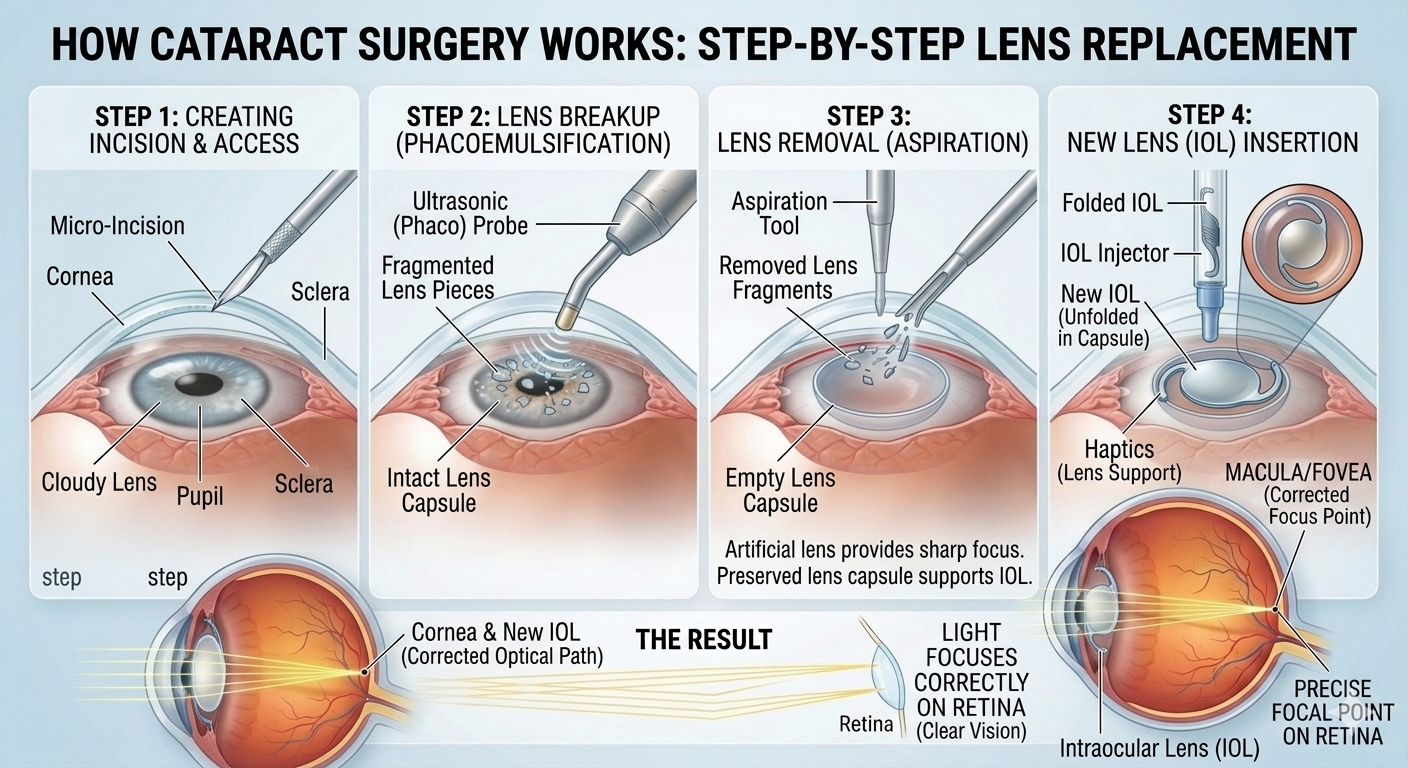
Cataract surgery removes the eye's clouded natural lens and replaces it with a clear artificial intraocular lens (IOL) — one of the most commonly performed and successful surgeries in medicine, using a minimally invasive technique called phacoemulsification.
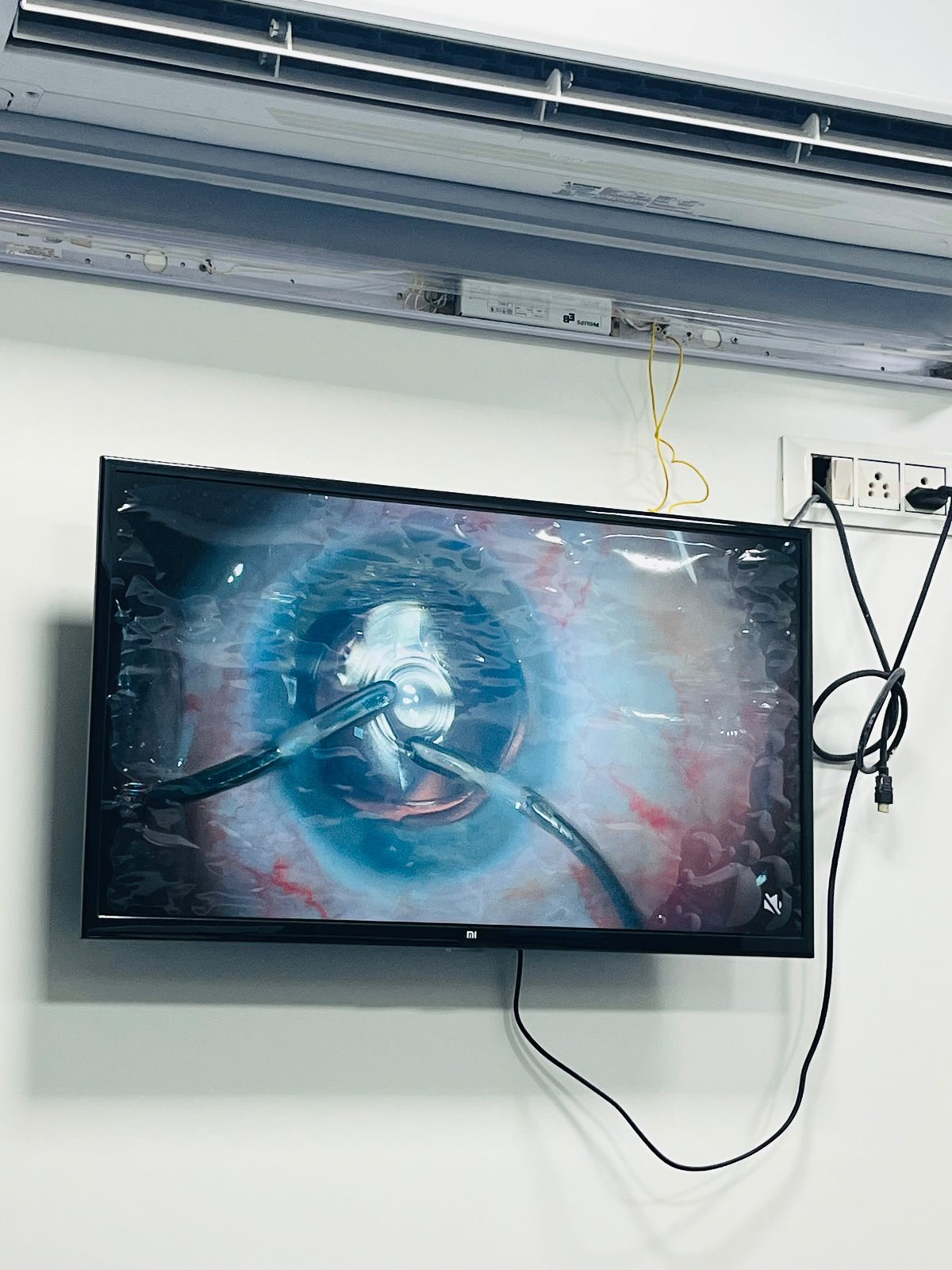
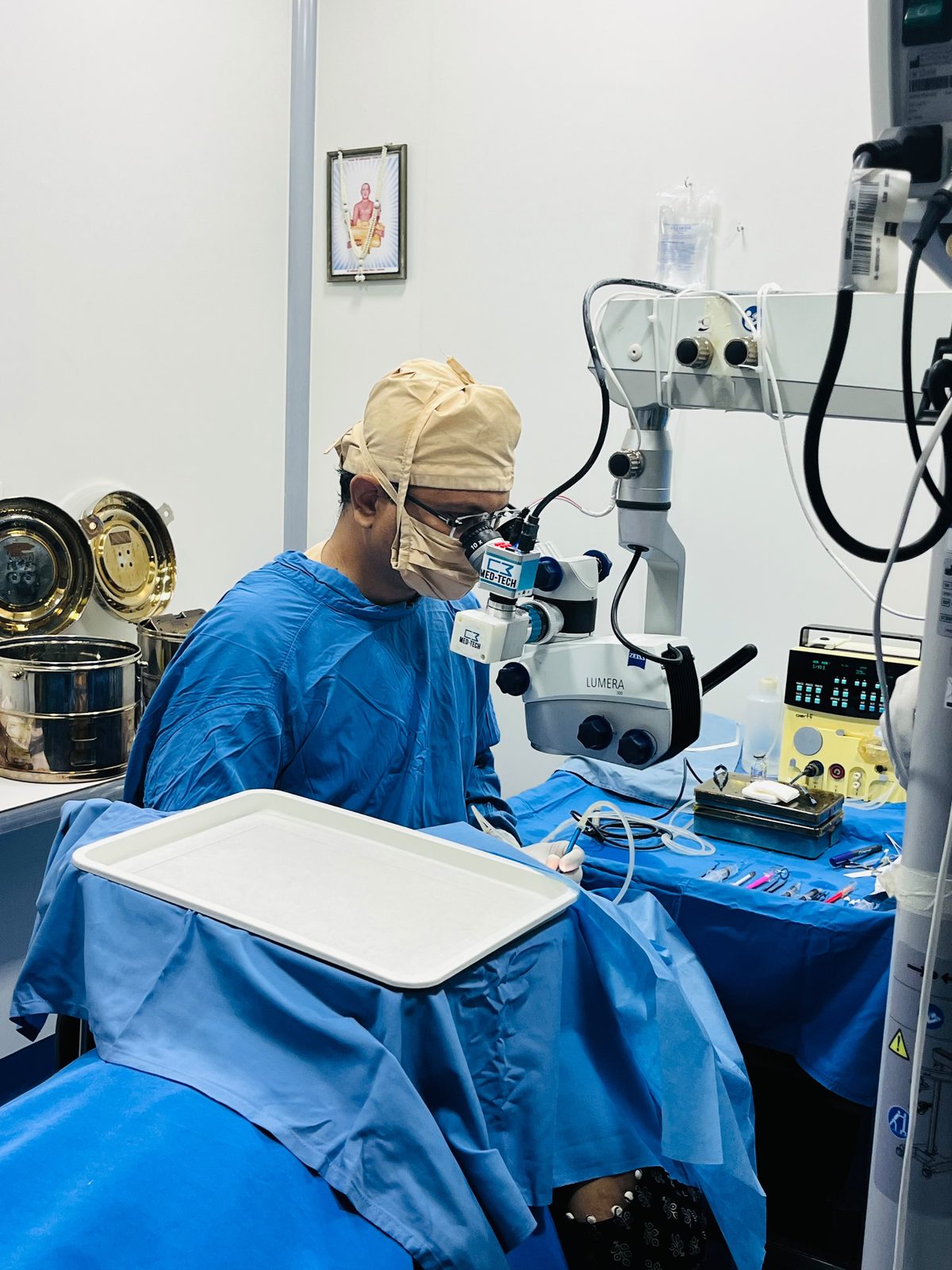
Filmed with the patient's informed consent.
Symptoms of a cataract
A cataract typically develops gradually, so it's easy to miss until it's fairly advanced. Common signs to watch for include:
- Blurred, cloudy, or hazy vision that doesn't fully clear with a change in glasses prescription
- Increasing sensitivity to glare, especially bright sunlight or oncoming headlights while driving at night
- Colours appearing faded, dull, or slightly yellowed compared to how you remember them
- Frequent changes to your glasses or contact lens prescription over a short period
- Difficulty reading, watching TV, or recognising faces at a distance, particularly in dim lighting
- Double vision or seeing "ghost" images in one eye
None of these on their own confirm a cataract — a proper eye exam is the only way to know for sure — but if several of these sound familiar, it's worth getting checked.
How phacoemulsification works
A small, self-sealing incision — typically just 2 to 3 millimetres — is made at the edge of the cornea. An ultrasonic probe breaks up (emulsifies) the cloudy lens into tiny fragments, which are gently removed. A folded artificial IOL is then inserted through the same small incision and unfolds into place, permanently replacing the natural lens. The procedure is usually done under local anaesthesia and takes only a matter of minutes per eye.
Preparing for surgery
Before your surgery date, Dr. Dhaval Patel will carry out a detailed eye examination, including measurements to calculate the correct power for your new lens, and will check for any factors that could affect the surgery or your choice of IOL. You'll typically be asked to start a course of prescription eye drops a few days beforehand, avoid eating or drinking for a few hours before your appointment, and arrange for someone to drive you home afterward, since your vision won't be reliable enough to drive safely on the day. Read our full pre-operative guide for a detailed day-by-day breakdown, or use our preparation checklist to make sure nothing gets missed.
Choosing the right IOL
Several types of intraocular lenses are available depending on your vision needs and lifestyle. Monofocal lenses provide sharp focus at one distance, usually far vision, with reading glasses still needed for close work. Multifocal, trifocal, and EDOF (extended depth of focus) lenses aim to reduce dependence on glasses across multiple distances. Dr. Dhaval Patel will walk you through which option genuinely fits your eyes and daily needs, rather than defaulting to the most expensive lens.
Recovery
Most people notice a real improvement in vision within a day or two, though complete healing and visual stabilisation typically takes four to six weeks. Antibiotic and anti-inflammatory eye drops are prescribed after surgery to support healing and prevent infection, and follow-up visits — usually at day one, week one, and around the four-to-six week mark — are how any concerns get caught early.
A few practical notes for the recovery period:
- Driving: avoid driving on the day of surgery; most patients can resume within a few days once vision feels reliable, but check with Dr. Patel first.
- Bathing: keep water, soap, and shampoo away from the operated eye for about a week.
- Exercise: avoid strenuous activity, heavy lifting, and swimming for around two to four weeks.
- Eye makeup: hold off on applying eye makeup near the operated eye for at least a week to reduce infection risk.
- Sleeping: you may be advised to avoid sleeping on the operated side, or to wear a protective eye shield at night for the first few days.
- Work: many patients return to non-strenuous work within a few days, though this varies by individual and type of work.
Possible side effects
Cataract surgery has a high success rate and is generally very safe, but some temporary side effects are common during healing: mild grittiness or a foreign-body sensation, watering, light sensitivity, and blurry vision in the first few days. Contact the clinic promptly if you notice worsening pain, sudden vision loss, increasing redness, or unusual discharge — these aren't typical and are worth checking without delay.
Why choose Sadbhaav for cataract surgery
Dr. Dhaval Patel, MD (Ophthalmology, AIIMS New Delhi), has performed cataract surgery for over a decade using modern phacoemulsification technique. Read our detailed cataract patient FAQ for more on symptoms, risk factors, and what to watch for, compare IOL lens types to choose the right lens, read our full pre-operative guide for detailed day-by-day preparation, see our preparation checklist before your surgery date, or learn about Dr. Patel's credentials and experience.
Cataract Surgery FAQ
See the full cataract surgery FAQ page for more questions and answers.
Noticing cloudy or blurry vision? Book a consultation or message us on WhatsApp to get evaluated.