LASIK Eye Surgery in Ahmedabad
LASIK (laser-assisted in-situ keratomileusis) is a laser procedure that reshapes the cornea to correct refractive errors — nearsightedness, farsightedness, and astigmatism — reducing or removing the need for glasses and contact lenses.
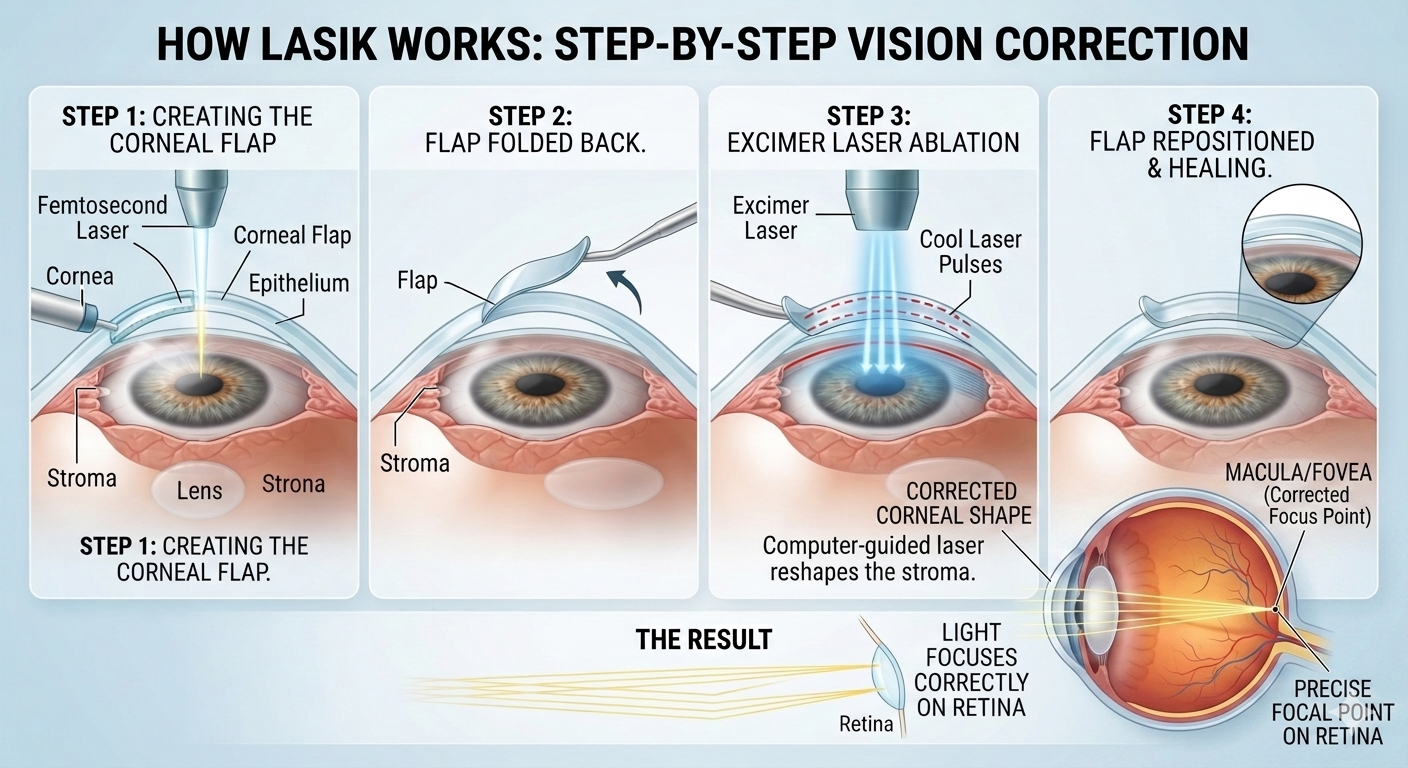
What LASIK can correct
- Myopia (nearsightedness): difficulty seeing distant objects clearly
- Hyperopia (farsightedness): difficulty focusing on nearby objects
- Astigmatism: blurred or distorted vision at any distance, caused by an irregularly shaped cornea
Most people considering LASIK are tired of the daily dependence on glasses or contact lenses — a detailed evaluation will confirm whether your specific prescription and eye health make you a good candidate.
How LASIK works
LASIK uses a laser to gently reshape the cornea, the clear front surface of the eye, so that light focuses correctly on the retina. A thin corneal flap is created and folded back, the laser reshapes the tissue underneath based on your specific prescription, and the flap is repositioned to heal naturally without stitches.
Am I a candidate for LASIK?
LASIK isn't right for everyone, and a proper candidacy evaluation matters more than the procedure itself. In general, good candidates are:
- Over 18, with a stable eyeglass or contact lens prescription for at least a year
- Free of active eye disease, infection, or significant dry eye
- Not pregnant or nursing, as hormonal changes can temporarily affect vision stability
- Without corneas that are too thin for safe reshaping
Conditions like keratoconus, uncontrolled diabetes, certain autoimmune disorders, or uncontrolled glaucoma may rule out LASIK — this is exactly what a pre-surgery evaluation is for, and Dr. Dhaval Patel will walk you through your own eligibility honestly rather than push you toward surgery that isn't right for your eyes.
What to expect on the day
The evaluation beforehand typically includes corneal topography (mapping the surface of your cornea), measuring corneal thickness, and a detailed refraction to confirm your prescription is stable. The procedure itself is usually quick — often completed within a short chair-side visit per eye — using numbing eye drops rather than general anaesthesia.
Recovery
Most people notice a real improvement in vision within a day, though full stabilisation can take a few weeks. Mild dryness, light sensitivity, or glare — especially at night — are common in the early recovery period and typically settle down. Your follow-up visits matter: they're how we catch and manage anything that needs attention early.
A few practical notes for the recovery period:
- Driving: avoid driving on the day of surgery; most patients can resume the next day once vision feels reliable, subject to your doctor's confirmation.
- Screens and reading: some patients find extended screen use uncomfortable in the first few days due to dryness — frequent breaks and lubricating drops help.
- Water and swimming: avoid getting water in the eyes and skip swimming for about two weeks.
- Eye makeup: avoid eye makeup for about a week to reduce infection risk near the healing flap.
- Rubbing: avoid rubbing your eyes, especially in the first few weeks while the corneal flap fully settles.
- Exercise: light activity is usually fine within a few days; avoid contact sports and swimming for about a month.
Possible side effects
LASIK has a strong safety record, and most side effects are mild and temporary: dryness, glare or halos around lights at night, and light sensitivity are common in the first few weeks and typically improve. Contact the clinic if you notice worsening pain, sudden vision loss, or unusual discharge — these aren't typical and are worth checking without delay.
Why choose Sadbhaav for LASIK
Dr. Dhaval Patel, MD (Ophthalmology, AIIMS New Delhi), personally evaluates every patient's candidacy before recommending LASIK — the goal is the right outcome for your eyes, not just booking a surgery. Not sure if LASIK or ICL is right for you? Read our LASIK vs ICL comparison, read our full pre-operative guide for detailed day-by-day preparation, see our preparation checklist before your surgery date, or learn about Dr. Patel's credentials and experience.
LASIK Treatment FAQ
See the full LASIK treatment FAQ page for more questions and answers.
Wondering if you're a good candidate for LASIK? Book a consultation or message us on WhatsApp to get started.