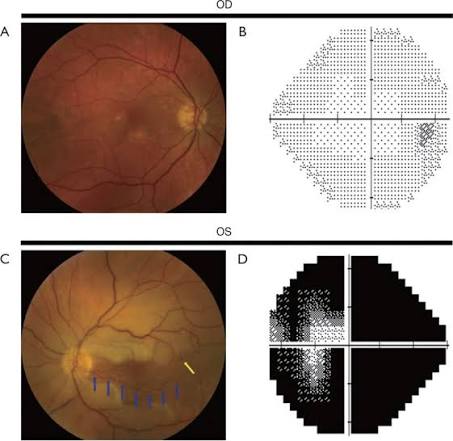
Retinal Artery Occlusion: A Stroke of the Eye
Last updated: September 2026
Central retinal artery occlusion (CRAO) is now understood as a stroke of the eye — and the management paradigm has shifted accordingly, with a strict time window and an emerging (though still not definitively proven) role for thrombolysis.
Why "stroke of the eye" is the right framing
CRAO shares the same embolic/thrombotic pathophysiology as ischemic cerebral stroke, and increasingly the same systemic workup and urgency — but historically, ophthalmology and stroke neurology have managed it quite differently, and current guidelines push toward unifying the approach.
The critical time window
Duration of retinal ischemia correlates directly with ganglion cell loss, with 240 minutes (4 hours) cited as the cutoff beyond which massive, irreversible retinal damage is expected — closely mirroring the ~4.5-hour window used in cerebral stroke thrombolysis protocols. This is why CRAO is a true same-hour emergency, not a "see when convenient" ophthalmology referral.
Thrombolysis: promising but still not definitively proven
This is a genuinely active, evolving area rather than settled practice:
- Multiple observational studies and meta-analyses of IV tissue plasminogen activator (tPA) in CRAO presenting within 4.5 hours have shown a strong positive signal for visual recovery
- Several randomized controlled trials have been conducted to test this properly: THEIA (IV alteplase vs. oral aspirin within 4.5 hours) has recently reported in Lancet Neurology (November 2025); other trials (TenCRAOS, REVISION) have been underway to build a more definitive evidence base
- A 2022 survey of German stroke units found real-world practice already quite heterogeneous: roughly 57% of responding centers performed thrombolysis for CRAO despite the absence of definitive RCT-level guidance at that time — reflecting genuine clinical uncertainty translated into variable practice
- Practical implication for residents: know that thrombolysis for CRAO is an area of active investigation with a plausible rationale and some supportive data, but is not yet uniformly endorsed as standard of care the way it is for cerebral stroke — practice varies significantly by center and country
A real safety concern with thrombolysis
Case reports describe intraocular hemorrhage following intravenous thrombolysis given for a misdiagnosed CRAO — underscoring that accurate diagnosis before treatment matters enormously, since thrombolysis carries real bleeding risk that isn't justified if the underlying diagnosis turns out to be wrong.
Current diagnostic and triage approach
- Painless, sudden monocular vision loss is the classic presentation — treat as a stroke-equivalent emergency requiring same-day, ideally same-hour, evaluation
- The AAO's 2024 Preferred Practice Pattern for Retinal and Ophthalmic Artery Occlusions now frames CRAO explicitly within a stroke-care pathway
- Point-of-care ultrasound and OCT are increasingly used as emerging bedside diagnostic adjuncts alongside traditional fundus examination
- Given the shared embolic mechanism with cerebral stroke, urgent same-day stroke workup is now standard: carotid imaging, cardiac evaluation (echocardiogram, telemetry for atrial fibrillation), and standard vascular risk factor assessment — a CRAO diagnosis should trigger the same systemic urgency as a TIA, not just an ophthalmology-only response
- Telemedicine-enabled thrombolysis pathways are emerging in some centers specifically to reduce the time from symptom onset to potential treatment
Older treatments: limited evidence
Ocular massage, anterior chamber paracentesis, and hyperbaric oxygen have all been historically described, but none has robust evidence supporting a meaningful effect on visual outcome — they should not be relied upon as definitive treatment, and shouldn't delay the systemic stroke workup that matters more.
Key references: AAO. Retinal and Ophthalmic Artery Occlusions PPP, 2024. | Central retinal artery occlusion: a stroke of the eye. Eye. 2024. | Treatment of acute CRAO: light at the end of the tunnel? Lancet Neurol. 2025.
📘 Want the exam-ready deep dive? This topic, and much more is covered in Ophthalmology Explorer (A High-Yield Clinical Reference for Ophthalmology Residents, Fellows & Board Exams) — available on Kindle. See all my books.
Want to know more about treatment? Read about Corneal Topography at Sadbhaav or book a consultation with Dr. Dhaval Patel.