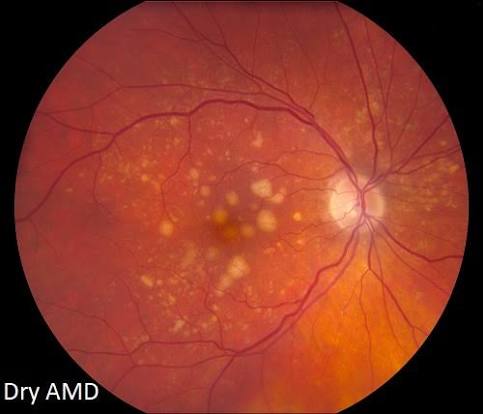
AMD: The Current Anti-VEGF Landscape
Last updated: September 2026
The anti-VEGF landscape for neovascular AMD has expanded meaningfully in just the past 2-3 years — the core treatment principle hasn't changed, but the tools available to reduce injection burden while maintaining control have genuinely improved, and residents trained even a few years ago should know what's new.
The established backbone
Ranibizumab, bevacizumab, and standard-dose aflibercept (2mg) remain the well-established first-line anti-VEGF agents, delivered via intravitreal injection in treat-and-extend or fixed regimens. This remains the foundation of nAMD treatment worldwide.
What's new: extending the interval between injections
The central problem anti-VEGF therapy has never fully solved is treatment burden — frequent injections are hard to sustain for patients and health systems alike. Two newer options specifically target this:
| Agent | Mechanism | Key trial evidence |
|---|---|---|
| Faricimab | Bispecific antibody targeting both VEGF-A and angiopoietin-2 (Ang-2) — the first anti-VEGF agent with a second target | TENAYA and LUCERNE trials: non-inferior to standard anti-VEGF with superior durability, supporting extended dosing up to every 16 weeks in responding patients |
| High-dose aflibercept (8mg) | Same VEGF-A/PlGF mechanism as standard aflibercept, but at a higher molar concentration for slower ocular clearance | PULSAR trial: non-inferior efficacy with extended durability; FDA-approved August 2023 |
The rationale for higher-dose aflibercept is straightforward pharmacokinetics: more drug molecules in the eye means slower clearance and a longer effective duration, without needing a fundamentally different mechanism.
Real-world evidence: what happens when you switch a "difficult" patient
2025 real-world data addressing a genuinely practical question — what to do with patients who can't be extended past frequent dosing on their current agent — found:
- Switching from standard aflibercept to high-dose aflibercept: 70% of eyes achieved 8-week or longer intervals, with median interval increasing from 6 to 9.7 weeks
- Switching from faricimab to high-dose aflibercept: only 54% achieved 8-week+ intervals (median 6 to 8.1 weeks) — a significantly smaller gain, since these patients had already been optimized on a durable agent before switching
- Practical implication: switching agents helps most when the patient hasn't already tried a durability-focused option — a faricimab non-responder is less likely to gain as much from switching to high-dose aflibercept as an aflibercept-2mg patient would
Population-level impact
Registry data from Norway (2021-2025) following the introduction of these newer agents found the number of treated patients rising steadily, while mean injections per patient actually decreased (from 7.7 to 6.8 annually) — early real-world evidence that these newer durability-focused agents are achieving their central goal of reducing per-patient treatment burden at a population level, even as more patients overall are being treated.
A safety note worth knowing
High-dose aflibercept carries an ongoing signal for intraocular inflammation in some case series, reinforcing that "more durable" doesn't mean "risk-free" — appropriate patient counseling and monitoring remain necessary regardless of which newer agent is chosen.
Key references: Clinical trials and real-world studies examining faricimab and high-dose aflibercept. Curr Opin Ophthalmol. 2025. | Switching to Faricimab or High-Dose Aflibercept in High-Demand Patients. Clin Exp Ophthalmol. 2026. | Highlights from AAO 2025: Anti-VEGF Therapies for AMD.
📘 Want the exam-ready deep dive? This topic, and much more is covered in Ophthalmology Explorer (A High-Yield Clinical Reference for Ophthalmology Residents, Fellows & Board Exams) — available on Kindle. See all my books.
Want to know more about treatment? Read about Corneal Topography at Sadbhaav or book a consultation with Dr. Dhaval Patel.