Dry Eye Treatment in Ahmedabad
Dry eye syndrome happens when your eyes don't produce enough tears, or the tears evaporate too quickly, leaving the eye surface irritated, gritty, or uncomfortable — a very common, very treatable condition that's often made worse by screen use, air conditioning, and certain medications.
Common symptoms
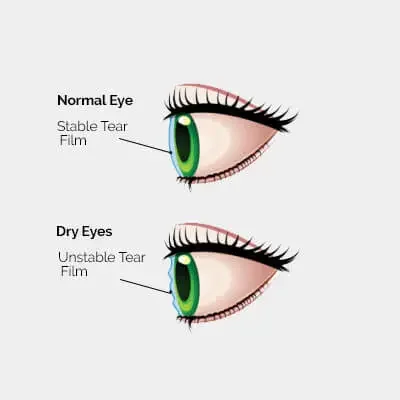
Dry eye can show up as a stinging or burning sensation, a gritty feeling, redness, sensitivity to light, or — counterintuitively — watery eyes, since excessive tearing is sometimes the eye's overcompensation for an unstable tear film. Symptoms often worsen through the day, especially with extended screen use.
Evaluating dry eye
A slit-lamp examination, along with tests that check tear production and how quickly the tear film breaks up, helps pinpoint whether the issue is too little tear production, poor tear quality, or a related cause like meibomian gland dysfunction — each responds somewhat differently to treatment.
Treatment options
Most cases start with preservative-free artificial tears used consistently through the day, along with simple habit changes — taking breaks from screens, using a humidifier, and staying hydrated. For more persistent cases, treatments addressing the meibomian glands, prescription anti-inflammatory drops, or punctal plugs (which help retain natural tears) may help. Dry eye linked to another condition, like pterygium, often improves once that underlying cause is treated.
Frequently Asked Questions
Why choose Sadbhaav for dry eye treatment
Dr. Dhaval Patel, MD (Ophthalmology, AIIMS New Delhi), identifies the actual underlying cause of your dry eye rather than just prescribing generic drops. Read our patient guide on dry eyes, or learn about Dr. Patel's credentials and experience.
Dealing with persistent eye irritation or dryness? Book a consultation or message us on WhatsApp.