Diabetic Retinopathy Treatment in Ahmedabad

Regular screening and timely treatment to protect vision in diabetic patients

Explore our eye services: Cataract Surgery, LASIK Eye Surgery, and Glaucoma Treatment.

Diabetic Eye Care

Diabetic Retinopathy Treatment in Ahmedabad

Diabetic retinopathy develops when prolonged high blood sugar damages the blood vessels in the retina — a leading cause of vision loss in people with diabetes, and one where regular screening genuinely prevents blindness in most cases.
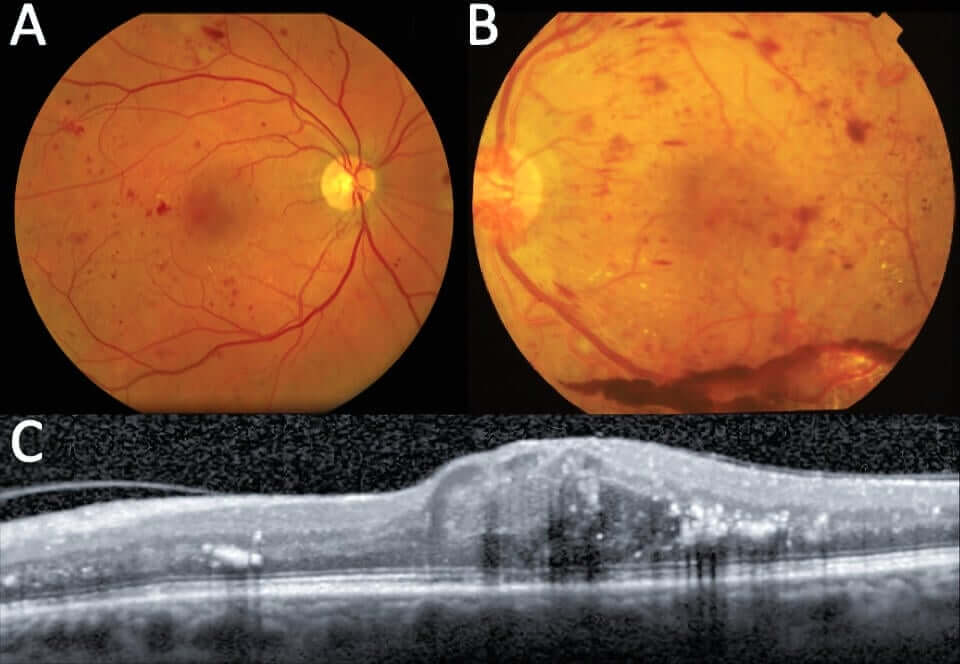
Diabetic Retinopathy Treatment

Why regular screening matters

Diabetic retinopathy often has no symptoms in its early stages, which is exactly why annual dilated eye exams — including fundus photography to document and track retinal changes over time — are recommended for every diabetic patient regardless of how well vision seems. The sooner it's caught, the easier — and more effective — treatment is.

Treatment options

Laser photocoagulation is a well-established treatment: focused laser energy seals leaking vessels or shrinks the abnormal new blood vessels that form in advanced disease, and has been shown to meaningfully reduce the risk of severe vision loss. For diabetic macular edema, anti-VEGF injections into the eye can reduce swelling and stabilise or improve vision. In more advanced cases with bleeding or scar tissue, vitrectomy surgery may be needed.

What to expect

Laser treatment is done in-office, usually over one or more sessions, and vision is typically blurry for the rest of the day afterward. Good blood sugar and blood pressure control remains important even after successful treatment, since it directly affects whether retinopathy progresses further.

Frequently Asked Questions

Early-stage changes can sometimes stabilise or improve with better blood sugar control, but more advanced damage generally cannot be fully reversed. This is why annual screening matters — catching it early gives treatment the best chance of preserving vision.
Often not in its early stages. Vision can remain completely normal while damage is already occurring in the retina, which is exactly why regular screening — not waiting for symptoms — is recommended for every diabetic patient.
Depending on severity, treatment may include anti-VEGF injections to reduce abnormal blood vessel growth and swelling, laser treatment to seal leaking vessels, or closer monitoring for early-stage changes. Fundus photography is used throughout to track progression.
Generally once a year, though your doctor may recommend more frequent checks if retinopathy is already present or your diabetes is harder to control. Regular screening is the single best protection against vision loss from this condition.
Injections and laser treatment are both done under numbing eye drops. Most patients feel mild discomfort or pressure rather than significant pain, and there's minimal downtime afterward.
Well-controlled blood sugar, blood pressure, and cholesterol significantly reduce the risk and slow progression, though they don't guarantee prevention entirely — regular eye screening remains important regardless of how well-controlled your diabetes is.

Why choose Sadbhaav for diabetic retinopathy care

Dr. Dhaval Patel, MD (Ophthalmology, AIIMS New Delhi), screens and manages diabetic retinopathy with modern retinal imaging to catch changes early. Read our patient guide on diabetes and the eye, or learn about Dr. Patel's credentials and experience.

Living with diabetes and due for an eye check? Book a consultation or message us on WhatsApp.

Dedicated to Your Smile, Devoted to Your Sight

Where healthy eyes and confident smiles come together.

Qualification from AIIMS

Our doctors are qualified from the prestigious AIIMS New Delhi. They are the best and experts in their respective fields.

Vast Experience

Our doctors have more than 10 years of experience in their respective fields.

Best Team

Our humble and polite staff is always ready to serve you the best.

International Camps

Dr Dhaval Patel has conducted many eye camps in Africa and visits yearly for the same.