LASIK Treatment FAQ

Honest answers to the questions patients actually ask

AIIMS-trainedMD Ophthalmology, AIIMS New Delhi
25,000+cataract surgeries performed
4.9 on Googlefrom 536+ patient reviews
GIC empanelledcashless with health insurers across India
Common Concerns

LASIK Treatment FAQ

Real questions and honest answers about LASIK — the kind of worries patients bring up before their procedure.

A lid speculum gently holds your eyelids open throughout the procedure, so blinking isn't a concern. Involuntary eye movement is expected and cannot be fully controlled — the laser system tracks your eye's position in real time and adjusts automatically to maintain accuracy.
In most cases, LASIK results are stable long-term. If vision does shift afterward, it's usually due to natural age-related changes (like presbyopia) rather than the surgery itself, or occasionally mild regression that can sometimes be corrected with a touch-up procedure. A thorough pre-surgical evaluation significantly reduces the chance of this.
Many patients notice significantly clearer vision within a day, with full stabilisation over the following weeks. Mild glare, halos, or dryness are common in the early recovery period and typically settle down.
No. The eye is numbed with anaesthetic drops before the procedure, and most patients describe mild pressure rather than pain. Some temporary discomfort, dryness, or grittiness is normal for the first day or two afterward.
The laser treatment itself typically takes well under a minute per eye. Including preparation, most patients are in the chair for a relatively short visit.
Yes, LASIK is usually performed on both eyes during the same visit, since the procedure and recovery process are the same for each eye.
Not everyone is. If your evaluation shows LASIK isn't suitable — due to thin corneas, an unstable prescription, or other factors — we'll tell you honestly, and discuss whether an alternative like ICL or another procedure might be a better fit. Compare your options here.
LASIK corrects your current prescription, but it doesn't prevent natural age-related vision changes like presbyopia, which affects near vision starting around your 40s regardless of whether you've had LASIK. This is a normal part of ageing, not a sign the surgery failed.

Have a question we haven't covered? Book a consultation or message us on WhatsApp.

Dedicated to Your Smile, Devoted to Your Sight

Where healthy eyes and confident smiles come together.

Qualification from AIIMS

Eye care by an AIIMS-trained ophthalmologist; dental care by an MDS endodontist — both dedicated specialists in their respective fields.

Vast Experience

Dr. Dhaval Patel has practised ophthalmology since his residency at AIIMS, New Delhi, began in 2011; Dr. Dhara Patel has been an endodontist since 2016.

Bilingual, Patient-Friendly Team

Our staff communicates comfortably in both Gujarati and English, so every step of your visit — from reception to aftercare instructions — is easy to follow.

International Camps

Dr Dhaval Patel has conducted many eye camps in Africa and visits yearly for the same.

Medically reviewed by Dr Dhaval Patel, MD Ophthalmology (AIIMS, New Delhi). Last reviewed: November 2026. This page is general information and does not replace an examination.

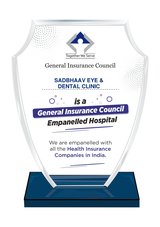
General Insurance Council empanelled hospital placard

Now GIC empanelled: cashless eye treatment with health insurers across India

Sadbhaav is empanelled with the General Insurance Council, so policyholders of its member general and health insurance companies can ask for cashless treatment for eligible eye care such as cataract surgery, subject to policy terms and pre-authorisation.

How cashless worksCheck my policy on WhatsApp