Understanding Eyeglass Lens Coatings & Brands
One of the most common questions we hear in the clinic isn't about a disease at all — it's "which glasses should I actually get?" Anti-glare, blue block, night vision — the terms get used loosely and often interchangeably, so here's what each one genuinely means.
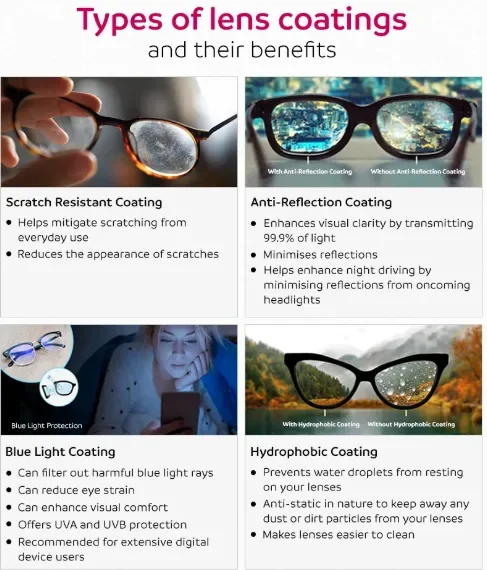
Anti-Glare / Anti-Reflective (AR) Coating
This is a thin coating applied to the front and back surfaces of your lens that reduces reflections. A regular uncoated lens lets around 92% of light through; an AR-coated lens lets through roughly 99.5%, meaning far less light bounces around inside the lens as distracting reflections and glare. This is genuinely useful for screen work, and especially for night driving — a back-surface AR coating specifically cuts down the ghosting and haloing you see around oncoming headlights and streetlights. Of everything covered on this page, AR coating has the most consistent, well-established evidence behind it.
Blue Block / Blue Cut Lenses
These lenses are designed to filter out a portion of blue light — the high-energy visible light emitted heavily by digital screens and LED lighting — typically blocking anywhere from 10% to 90% depending on the lens. They're marketed for reducing digital eye strain and improving sleep.
Being honest about the evidence: this is worth knowing plainly. A 2023 Cochrane review — the gold standard for medical evidence — along with several randomised controlled trials, found that blue-light filtering lenses do not show a clear, measurable benefit for eye strain or sleep quality compared to regular lenses. That said, some patients using them long-term do report feeling more comfortable, particularly when combined with good screen habits like the 20-20-20 rule. Our honest take: blue block lenses aren't harmful and some patients do prefer them, but they shouldn't be sold or bought as a proven medical fix for eye strain — genuine relief from digital eye strain comes more reliably from screen breaks, correct prescription, and good lighting.
Night Vision / Night Driving Lenses
This term gets used for two genuinely different things, worth telling apart. Non-prescription yellow or amber-tinted "night driving glasses" sold over the counter filter some blue light and can improve contrast in fog or haze, but they don't correct any underlying vision problem — if astigmatism or an outdated prescription is the real cause of your night driving trouble, tinted lenses alone won't fix it. A back-surface AR coating on your actual prescription glasses is generally the more effective, evidence-backed option for reducing headlight glare specifically.
Comparing Lens Brands: Zeiss, Essilor & Hoya
Patients often ask which brand is "best." Honestly, all three are genuine premium manufacturers investing heavily in lens research, and for most everyday prescriptions the practical difference is smaller than people expect. Here's a fair, general comparison:
| Brand | General Positioning | Known For | Typical Price Tier |
|---|---|---|---|
| Zeiss | Precision optics heritage (from industrial & camera lens engineering) | Distance clarity, contrast, individualised progressive lenses | Premium |
| Essilor | Broad accessibility with strong global availability | Wide product range, comfortable adaptation for first-time progressive wearers, intermediate/computer-distance comfort | Mid to Premium |
| Hoya | Comfort-focused, less commonly known but well regarded among opticians | Handling higher prescriptions and eye-dominance differences well | Mid to Premium |
In practice, the specific coating and lens design matter more for your day-to-day comfort than the brand name alone. A mid-tier lens with good AR coating, correctly fitted to your actual prescription and frame, will usually serve you better than a premium brand lens chosen without a proper fitting.
Our honest recommendation
Start with a proper, current prescription — an outdated one is the most common real cause of eye strain and night driving trouble, regardless of what lens or brand you choose afterward. From there, prioritise a good AR coating for glare and screen comfort; treat blue-block as an optional personal preference rather than a guaranteed fix; and choose a lens brand based on your specific prescription complexity and budget rather than marketing alone.
Why choose Sadbhaav for eyewear guidance
Dr. Dhaval Patel, MD (Ophthalmology, AIIMS New Delhi), gives honest, evidence-based guidance on lens coatings and options — not a sales pitch for whichever product has the best margin. If you're considering cataract surgery, read our guide to IOL lens types too, or learn more about Dr. Patel's credentials and experience.
Not sure which lens coating is right for you? Book a consultation or message us on WhatsApp.