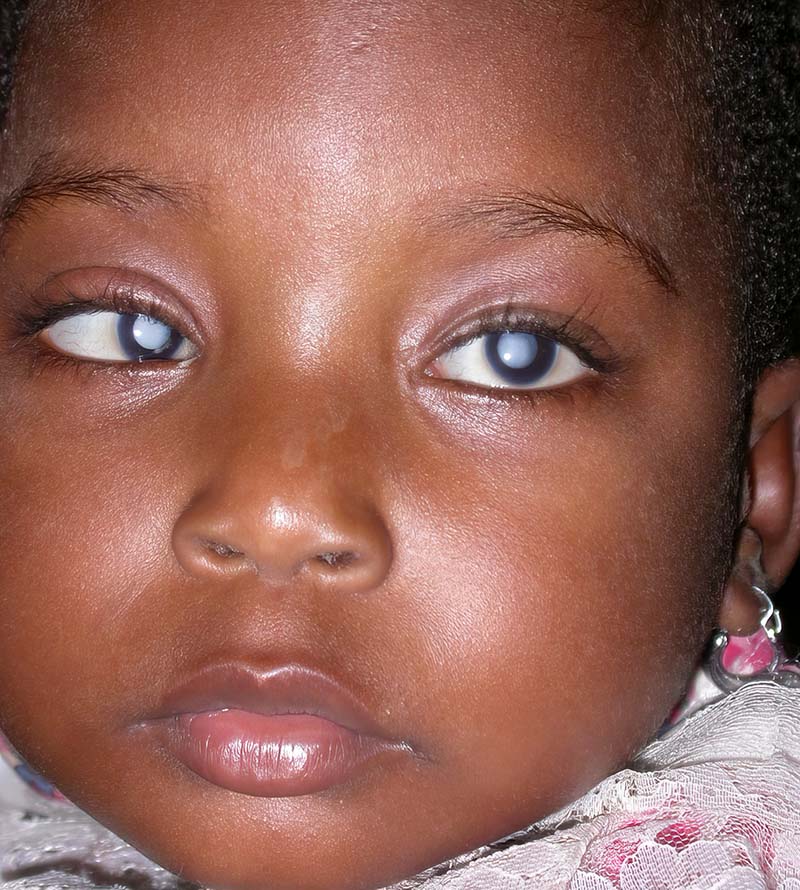
Congenital Cataract: Timing & Management
Last updated: September 2026
In congenital cataract, timing is everything — the visual system's plasticity window means delayed surgery doesn't just postpone treatment, it can permanently cap the vision that's achievable, regardless of how technically perfect the eventual surgery is.
What makes a cataract "visually significant" (surgery indicated)
- Central lenticular opacity larger than 3mm
- Posterior opacity, or an opacity with no clear zones surrounding it
- Retinal details not visible with direct ophthalmoscopy through the opacity
- Presence of nystagmus or strabismus (suggests the visual deprivation has already begun affecting fixation)
- Poor central fixation persisting after 8 weeks of age
Current timing recommendations
| Presentation | Recommended timing |
|---|---|
| Visually significant unilateral cataract | As early as 4 weeks of age; optimal window widely cited as 6-8 weeks |
| Visually significant bilateral cataract | By 6 weeks of age (some sources cite up to 4 months as acceptable for bilateral cases, since bilateral visual deprivation is more symmetric and somewhat more forgiving than unilateral) |
The IoLunder2 study found each additional month of age at surgery within the first 3 months of life was associated with progressively worse visual outcome — reinforcing that "early" isn't just a preference, it's measurably dose-dependent. That said, a brief 1-4 week delay is often deliberately built in to allow corneal healing and reduce inflammatory response, since operating on a very young infant carries its own anesthetic and surgical risks that must be balanced against the urgency.
The central tension: early surgery vs. secondary glaucoma risk
This is the single most important trade-off in congenital cataract management: earlier surgery improves visual outcome, but very early lensectomy (particularly before 4-6 weeks) is associated with a higher risk of aphakic glaucoma later in childhood. There's no way to eliminate this trade-off entirely — it requires informed family counseling and committed long-term follow-up, since aphakic glaucoma can develop years after surgery and is often insidious.
IOL implantation vs. aphakia: current practice
- In children under 2 years old with bilateral congenital cataract, both primary IOL implantation and primary aphakia (contact lens/glasses correction) remain accepted options — this is a genuine area without full consensus, and choice varies by surgeon, center, and specific case factors
- Many surgeons still prefer leaving infants under 1 year aphakic initially, given ongoing ocular growth and an expected myopic shift that complicates IOL power selection at this age
- Cases with microcornea, persistent fetal vasculature, or rubella-associated cataract are often preferentially left aphakic at the primary surgery, given higher complication risk with primary IOL in these eyes
- Traumatic cataract with corneal injury is an exception where primary IOL is often preferred, since contact lens fitting can be difficult with corneal irregularity
IOL power calculation: a genuinely unresolved challenge
Traditional third-generation formulas (SRK-T, Holladay 1) remain the most commonly used in pediatric cases — but every formula in routine use was derived from adult biometric models, and none fully account for a child's ongoing axial elongation after surgery. This remains an active area with no single validated pediatric-specific formula achieving broad consensus.
The other half of the job: amblyopia therapy
Surgery is necessary but not sufficient — visual outcome depends just as much on committed postoperative optical correction (glasses, contact lens, or IOL) and rigorous compliance with occlusion (patching) therapy. See our Amblyopia page for current PEDIG evidence on patching regimens, which applies directly here.
Key references: Update on pediatric cataract surgery. 2025. | Surgical interventions for bilateral congenital cataract in children aged two years and under, Cochrane. | Intraocular lens power calculation in pediatric cataract surgery: a narrative review. 2025.
📘 Want the exam-ready deep dive? This topic, and much more is covered in Ophthalmology Explorer (A High-Yield Clinical Reference for Ophthalmology Residents, Fellows & Board Exams) — available on Kindle. See all my books.
Want to know more about treatment? Read about Corneal Topography at Sadbhaav or book a consultation with Dr. Dhaval Patel.